


Share house rules work when there are few of them, each one is specific, and everyone agrees to them before move-in, in writing. Seven topics cover almost every argument: money, cleaning, the kitchen, guests, noise, shared space and what happens when someone leaves. Skip the long list of dos and don'ts and write one clear line for each.
This guide gives you the rules worth having, wording you can copy, and the WA basics on what house rules can and cannot do. Sources were checked in October 2026.
Why do most share house rules fail?
Because they are vague, or they turn up after the problem.
"Keep the kitchen clean" means something different to every person in the house. "Dishes done before you go to bed" does not. A rule works when a stranger could read it and know whether it has been followed.
Timing matters as much as wording. Consumer Protection WA's advice to people renting a room is to check the house rules before moving in and make sure you are comfortable with them, because expectations vary a lot from one house to the next. The same goes for hosts: a rule you mention in the ad is an expectation, and a rule you bring up in week six is a fight. What else belongs in the ad is in how to find a housemate in Perth.
What should share house rules cover?
Seven topics. If your rules answer the question in the right-hand column, you are covered.
| Topic | The question to answer |
|---|---|
| Money | What is included in the rent, how are other bills split, and when is everything due? |
| Cleaning | Who cleans which shared area, and how often? |
| Kitchen and food | What is shared, what is not, and when are dishes done? |
| Guests | How much notice, how many nights, and who is responsible for them? |
| Noise | When are quiet hours, and does anyone sleep during the day? |
| Shared space | Parking, laundry, bathroom times, smoking, pets |
| Leaving | How much notice, and what condition is the room left in? |
House rules you can copy
Change the details to suit your house. Keep the level of detail.
Money
- Rent is due on the same day each week, by bank transfer, so there is a record.
- Say exactly what the rent includes: power, water, gas, internet. If bills are split, say how and when.
- Agree what happens to the split when someone is away for weeks at a time.
Cleaning
- Each person cleans up after themselves in the kitchen on the same day.
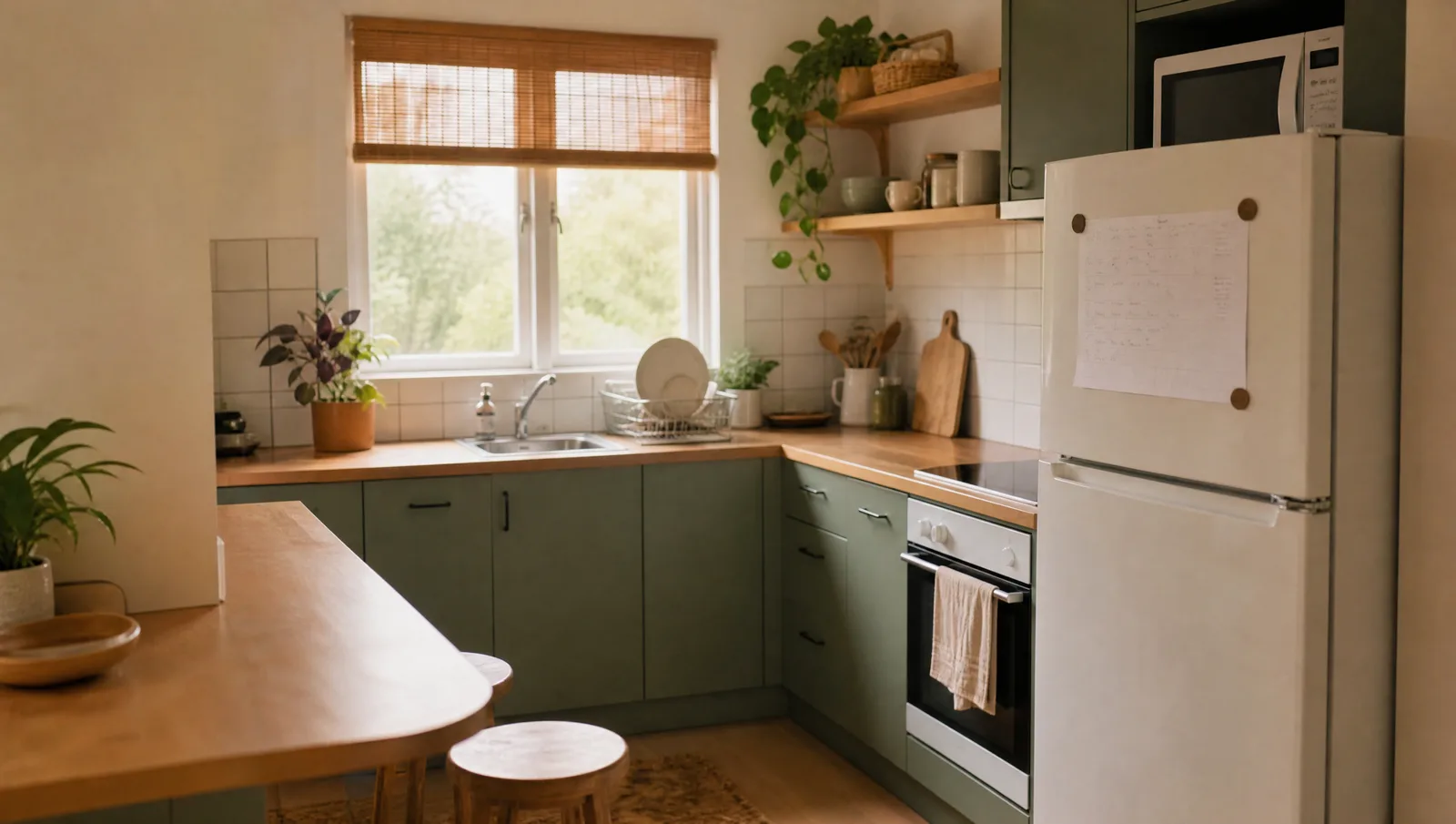
- Shared areas (bathroom, kitchen floor, living room, bins) are on a rotation. Write it down and put it on the fridge.
- If you are away for your turn, you swap it. You do not skip it.
Kitchen and food
- Each person has their own shelf in the fridge and the pantry. Everything else is shared only if you agreed it is.
- Shared basics, such as dish soap, bin bags and toilet paper, are bought in turn or from a kitty.
Guests
- A message in the house chat before anyone stays overnight.
- A limit on consecutive nights before a guest becomes a housemate who is not paying rent.
- Your guest, your responsibility.
Noise
- Quiet hours on weeknights, with times you have all agreed.
- If someone works nights or early starts, their sleep hours count as quiet hours too.
Shared space
- Who parks where, including when a car is left for weeks.
- Laundry: no loads left in the machine all day.
- Smoking and vaping: where, or not at all.
- Pets: who feeds, who cleans up, who pays for damage.
Leaving
- How much notice each side gives, in writing.
- The room is left clean and empty, with photos taken on the way in and on the way out.
How do you set rules without it feeling like a contract?
Have one conversation before move-in and put the result in one message.
Hosts: put the rules that matter in the listing. "We aren't a party house, but we are happy to share a BBQ or a glass of wine" is a real line from a Perth room ad, and it tells a reader more than a paragraph of conditions.
Seekers: say how you live. The words people in Perth use about themselves are a good start: clean, respectful, quiet, easygoing, social. Then add the specifics, such as "I don't smoke" or "I'm in bed by nine on work nights".
After the conversation, one person writes up what was agreed and sends it to the house chat. Everyone replies "agreed". That message is your house rules. When someone new moves in, they read it first.
Review it when something changes: a new housemate, a new roster, a new pet.
How do house rules work with a FIFO housemate?
A housemate on a FIFO roster is away for a week or more at a time, then home all day for a week. A few rules need adjusting.
- Cleaning rotation. Build it around the roster instead of the calendar. Someone who is away two weeks in three can take the bigger jobs in their week home.
- Bills. Decide once whether time away changes the split, and write it down. Rent included with bills is simpler for everyone.
- Their room. It is theirs for the whole cycle. Nobody uses it, stores things in it or puts a guest in it while they are on site.
- Sleep. The first day back from a swing, especially off night shift, is often spent asleep. Daytime quiet matters that day.
- The car. Where it sits while they are away, and who can move it.
- Contact. How to reach them on site if something happens to the room.
How many nights a FIFO worker is actually home depends on the roster. The numbers are in FIFO rosters explained.
What do house rules mean legally in WA?
House rules are an agreement between the people living together. They sit on top of your legal position, and that position depends on what kind of occupant you are. Community legal centre Circle Green describes three categories in a share house:
- Co-tenants. Your name is on the tenancy agreement with the others. Each co-tenant is presumed to be jointly liable, so a landlord can act against any or all of you for a breach, even if only one person caused it.
- Sub-tenants. You rent from a head tenant who is on the agreement with the landlord. You have the same rights and responsibilities as a tenant under the Residential Tenancies Act.
- Boarders and lodgers. You are not covered by the Act. Your rights and responsibilities are set out in your agreement with the person you pay rent to, and Circle Green notes that breaching house rules can be a reason for a landlord to end a boarding agreement.
Circle Green also lists house rules that control what you can do in the home as one of the factors that can point to someone being a boarder or lodger, along with the landlord living in the home. Only a court can decide your status, so if it matters, get advice. Each category is set out in rooming house, boarder or housemate: what's the difference in WA?.
Shared Tenancies fact sheet (Circle Green)circlegreen.org.au
Boarders' and lodgers' rights (Consumer Protection WA)consumerprotection.wa.gov.au
Two more points from Consumer Protection WA that touch on common house rules:
- For tenants, pets are now mostly allowed with the landlord's permission, under rental reforms that started on 29 July 2024. A house rule cannot stand in for that permission.
- For tenants, the landlord must issue rent receipts within three days of receiving a payment. Housemates paying each other should keep the same habit: a transfer with a clear reference.
Consumer Protection's advice to boarders and lodgers is to always keep a copy of the signed written agreement. This article is general information, not legal advice. For your own situation, call Consumer Protection on 1300 30 40 54.
Finding housemates who suit your house
Kipmates is a room-share marketplace launching in Perth. Hosts can describe the household in the listing and mark it as FIFO-friendly, seekers show their roster on their profile, and the first conversation happens in on-platform messaging, which is a good place to settle the rules before anyone moves a box. You can list a room or browse rooms. If you are the one looking, finding flatmates in Perth walks through the search.
FAQ
What are good house rules for housemates?
Good rules are specific and few. Cover seven topics: money, cleaning, kitchen and food, guests, noise, shared space and leaving. Write one clear line for each, such as "dishes done before bed" or "a message in the house chat before a guest stays over".
Should share house rules be in writing?
Yes. A written list that everyone has agreed to settles most arguments before they start. Consumer Protection WA also advises boarders and lodgers to always keep a copy of their signed written agreement.
Can a landlord or head tenant set house rules in WA?
In a boarding or lodging arrangement, house rules are usually part of the agreement, and Circle Green notes that breaching them can be a reason to end it. If you are a tenant or co-tenant, your rights come from the Residential Tenancies Act and your tenancy agreement, and house rules sit alongside them. If you are unsure which you are, ask Consumer Protection or a tenant advocate.
How do you split bills fairly in a share house?
Pick one method and write it down: bills included in the rent, or bills split equally and paid on a set date. If a housemate is away for weeks at a time, agree upfront whether that changes their share.
Does a FIFO housemate still have to clean?
Yes. The fair way is to build the rotation around their roster, so their share of the cleaning falls in the weeks they are home.
What happens if a housemate breaks the house rules?
Start with a conversation and the written rules. If it continues, what happens next depends on your agreement and on whether the person is a co-tenant, a sub-tenant or a boarder or lodger. Consumer Protection WA, on 1300 30 40 54, can explain your options.
Sources
Checked October 2026.
- From the Commissioner: boarders' and lodgers' rights explained (17 September 2025), Consumer Protection WA.
- Shared Tenancies fact sheet, Circle Green Community Legal.
- Boarders and Lodgers fact sheet, Circle Green Community Legal.
- Paying rent, Consumer Protection WA.
- New rental reforms move in this month (10 July 2024), Consumer Protection WA.